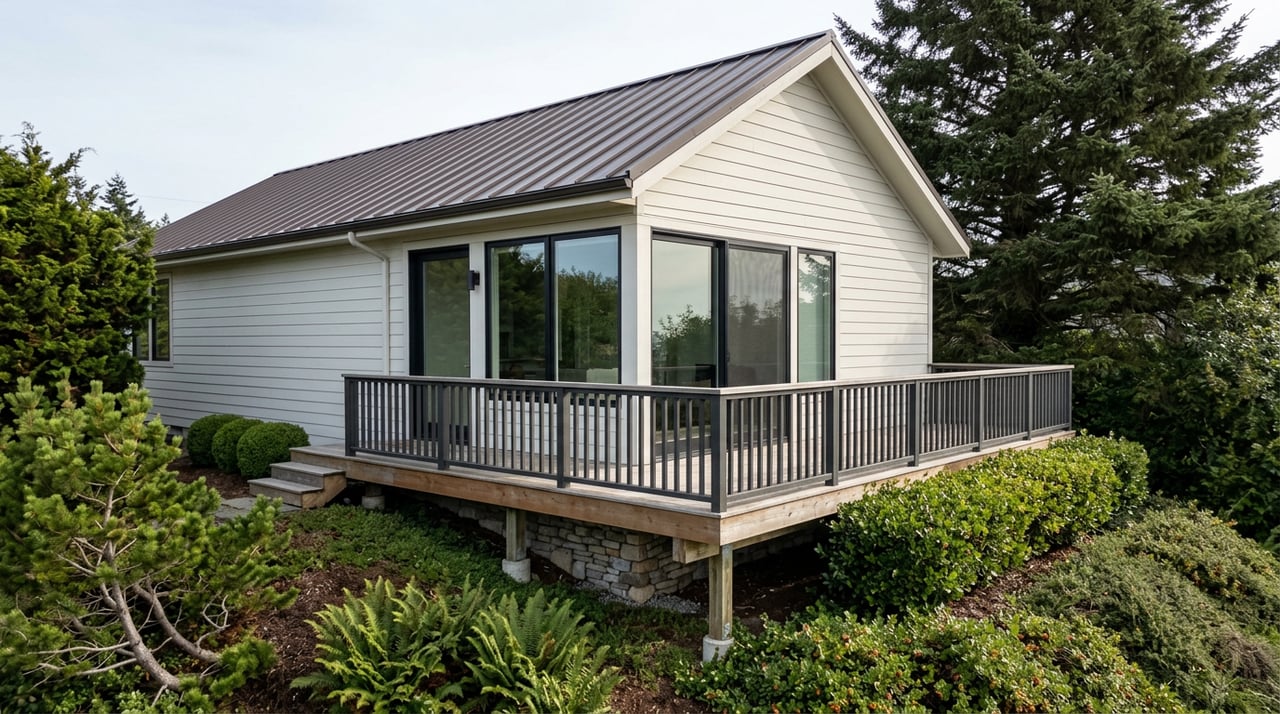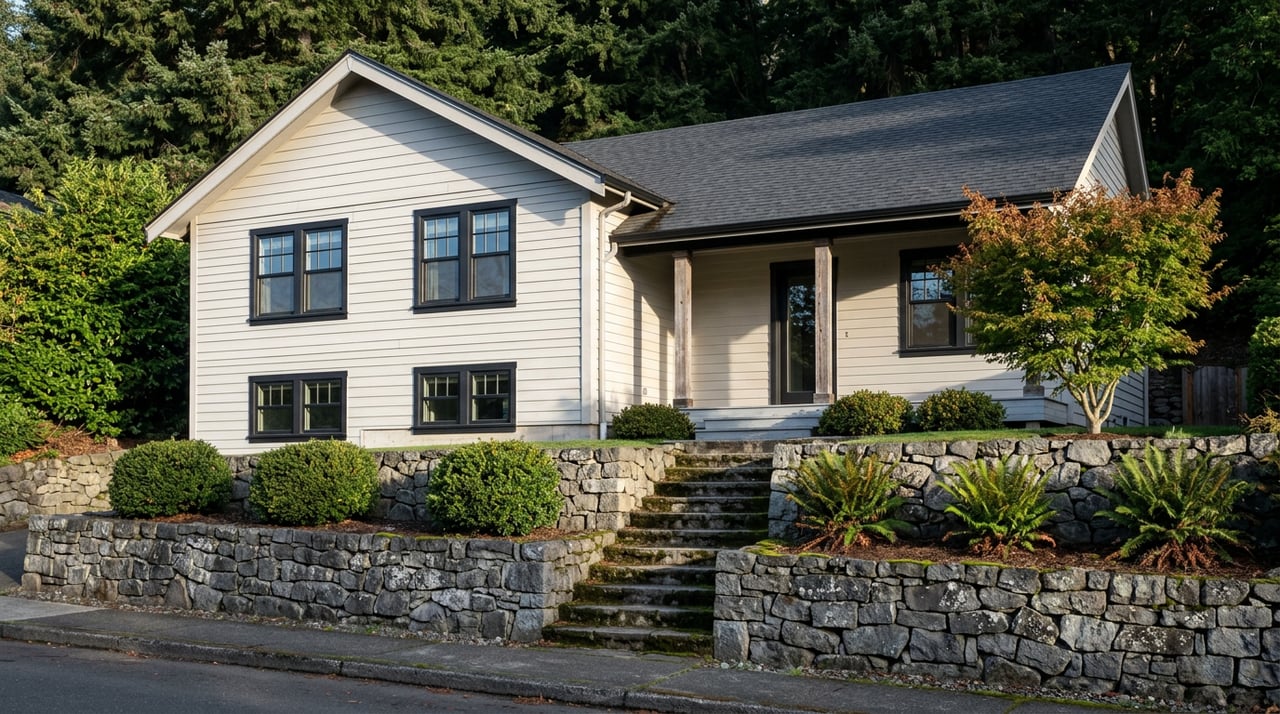
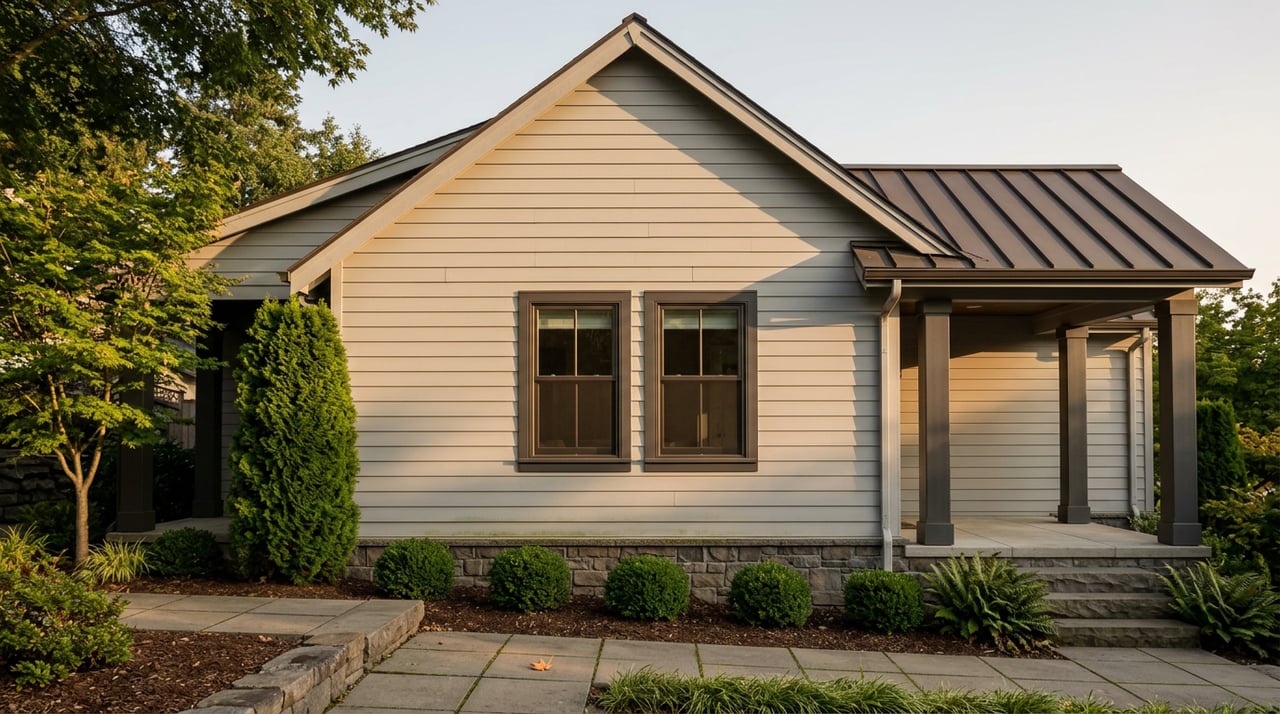
You walk through a house on the hill above downtown Astoria. Fish-scale shingles on the gable. A stained-glass transom over the front door that throws blue and amber light across the entry hall in the afternoon. The listing calls it "classic Astoria character," and it is. What the listing doesn't mention is that if you want to replace those windows, reshingle that gable, or add a dormer, you'll need a yes from seven people who meet once a month in the City Hall council chambers on Duane Street.
That approval layer is real, it's active, and it has nothing to do with whether your specific house is famous. It has to do with which block it sits on.
The Line Isn't the House. It's the Block.
Astoria has two districts listed on the National Register of Historic Places, Uniontown-Alameda and the Downtown district, plus a number of individually designated landmarks scattered across the hillside. The city's Historic Landmarks Commission reviews exterior alterations to historic structures and new construction adjacent to historic properties, which means the review can reach past the district boundary itself.
Two hearing notices from the commission's own agendas make the point. In March 2024, the commission held a public hearing on a proposed 40-foot, 23,000-square-foot multi-family building at 316 W Marine Drive, a site the notice describes as adjacent to structures designated as historic in the Uniontown-Alameda district. The same meeting took up a proposed three-story addition to the Columbia River Maritime Museum, flagged because the site sits next to buildings in the Downtown National Register district. Neither project was inside a historic structure. Both got a hearing because of what stood next door.
If a commercial development can trigger review by proximity, a homeowner one lot over from a contributing Victorian should assume the same logic applies to a new roofline or a window swap. The city's own GIS map shows zoning, historic designation, and district boundaries layered together, and it's worth pulling up before you get attached to a house, not after.
The Commission Behind the Ordinance
The Historic Landmarks Commission isn't a rubber stamp buried in a code section. It's a standing seven-member body, appointed by the mayor to four-year terms, currently seated as:
- Mac Burns, President
- Michelle Dieffenbach, Vice President
- Jack Osterberg
- Will Rose
- Jackson Ross
- Mike Francis
They meet the third Tuesday of every month at 5:30 p.m. in the Council Chambers, and their decisions can be appealed to the City Council. Astoria's Community Development staff, including city planner Tiffany Taylor, keeps the meeting notices, agendas, and minutes posted publicly, so the record of what gets approved and what gets sent back is available to anyone willing to read it.
That transparency cuts both ways for a buyer. It means you can look up exactly what kind of projects have gone in front of the commission recently. It also means there's no shortcut around the process. The exterior of a historic-district home is, in a real sense, co-owned by whoever holds a seat on that commission this term.
The Two Clocks You're Actually Running Against
Renovation planning inside a historic district runs on two separate timelines, and most buyers only budget for one of them.
- The Certificate of Appropriateness clock. Exterior work in a historic district requires a Certificate of Appropriateness, issued under Article 6 of the Astoria Development Code. A pre-application meeting with a planner is required before you file, and complete applications are due by the 13th of the month before the hearing you want. Miss that date and you wait another month.
- The building permit clock. Once you have that certificate, you still need a standard building permit through Oregon's ePermitting system. The city's own homeowner guidance sets current review times at three to nine months, depending on the scope of the project, and that's before a single inspection is scheduled.
Stack those two clocks and a straightforward exterior renovation, new siding, replacement windows that don't match the original profile, a rebuilt porch, can move from an afternoon decision at a hardware store to a project measured in seasons. None of that shows up in a comparative market analysis. It shows up the first time you call a contractor and ask when they can start.
What the Median Price Won't Tell You
Here's where the numbers get interesting, because they don't agree with each other, and that disagreement is itself the point.
Looking at the three months ending in June 2026, one widely used home-value tracker put Astoria's median sale price at $516,000, down 3.5 percent from the same period the year before. Zillow's home value index, updated at the end of July 2026, showed a typical Astoria home value of $486,426, essentially flat, down about 0.2 percent year over year. A regional coastal market report compiled by a mortgage loan officer and updated in June 2026 put Astoria's median starter price at $490,000 and claimed 7.1 percent year-over-year appreciation, the opposite direction from the first figure. A separate cost-of-living breakdown from the same month landed on roughly $487,000 as the median sold price.
Four sources, four numbers between $486,000 and $516,000, and two of them can't even agree on whether the market went up or down over the past year. That's not a knock on any single source. Astoria is a small market where a handful of high-end hillside sales or a run of fixer-upper closings can swing a median noticeably from one quarter to the next.
It's also exactly why none of these figures tell you anything about the specific friction this article is about. A median price aggregates every closed sale in the city limits, historic district and non-historic district alike, into one number. It cannot and does not distinguish between a mid-century ranch on Alderbrook Road, where you can reside the exterior with a phone call to a contractor, and a 1900s foursquare in Uniontown, where the same project needs a Certificate of Appropriateness first. Two houses can sell for the identical price this month and carry entirely different carrying costs once you start planning work on them.
If you're comparing an Astoria listing against something similar in Warrenton or Seaside on price alone, you're comparing the part of the equation that's easiest to see and skipping the part that actually determines how fast your renovation moves.
The Difference Between a Landmark and a Listing
It helps to separate two things that get lumped together in casual conversation: a house that's simply old, and a property the city has formally designated.
The Flavel House, built in 1885 by Columbia River bar pilot Captain George Flavel, is a full-on landmark, now a museum you can tour on 8th Street. Individually listed landmark status is a different, heavier designation than sitting inside a district boundary, and most buyers looking at Victorians on the hillside are dealing with the district version, not the landmark version.
The city has also shown it will put real money behind preservation when the project is civic rather than private. The restoration of the Liberty Theater, a 1925 building downtown, ran to $7.5 million total, with $1.3 million of that coming through the Astor-East Urban Renewal District alongside a Save America's Treasures grant. That's a useful data point for understanding the city's priorities, but it's not a template for how fast a private homeowner's Certificate of Appropriateness moves. Big, funded, civic preservation projects and a homeowner's request to replace a porch rail go through very different processes, even when both eventually touch the same commission.
Before You Write the Offer
If you're seriously considering a historic-district property in Astoria, a few steps before you sign anything will save you a genuinely frustrating year later.
- Pull up the property on the city's GIS map and confirm whether it sits inside the Uniontown-Alameda district, the Downtown district, or is individually listed, and check what's adjacent to it too.
- Ask the seller or listing agent whether any exterior features, windows, siding, roofing, have already been replaced, and with what materials. That history affects what the commission will and won't approve going forward.
- If you're planning specific exterior work, request a pre-application meeting with the city's planning staff before closing, not after. It costs you nothing but a phone call and tells you what you're actually walking into.
- Build the Certificate of Appropriateness timeline and the separate building permit timeline into your renovation schedule as two sequential steps, not one combined estimate.
A Few Direct Questions
Does the review apply if I just want to repaint the exterior? The commission's stated scope covers exterior alterations to historic structures. Routine repainting in the same color family is generally treated differently than a change of siding material, but the safest move is to ask the planning division directly before you buy paint, since the answer depends on the specific property and its designation.
What if my house is old but isn't inside either district and isn't individually listed? Then this specific process doesn't apply to you, which is exactly why confirming district status on the GIS map matters more than guessing from a home's age or style.
Can a denial be appealed? Yes. Historic Landmarks Commission decisions can be appealed to the City Council, though that adds its own time to the process rather than shortening it.
A hundred-year-old house on the Astoria hillside is worth what people pay for the light through that stained glass and the view down to the river. Just make sure the number you're comparing it against accounts for the seven people who get a say before you can change anything the street can see.
If you're weighing a historic Astoria property against something in Warrenton, Seaside, or across the river in Washington, PNW Real Estate Experts can walk the district lines with you before you write an offer, not after. Get a free home valuation and a straight answer on what you're actually buying.